IRS Bank Account Levy in Waco: The 21-Day Clock & How to Release Your Funds
Waking up to a frozen bank account with zero available balance is terrifying. Discover how the statutory 21-day holding period works under federal law and the exact steps to release your money.
The federal holding period before banks are required to remit frozen money to the U.S. Treasury.
Why local bank managers cannot unfreeze funds without an official Form 668-D direct from the IRS.
A bank levy attaches only to funds present at the time of service; future deposits are generally unencumbered.
1. Why Your Local Waco Bank Branch Cannot Unfreeze Your Account
Taxpayers who discover a zero balance often rush into their local bank branch—whether Extraco Banks on Franklin, TFNB on Bosque, Frost Bank, or Chase—expecting a branch manager to override the hold.
Branch managers cannot assist you. Under 26 U.S.C. § 6332(d), any bank that fails to honor an IRS levy is personally liable for the full amount plus a mandatory 50% penalty. Bank branch personnel are legally powerless to touch the funds until their centralized legal department receives an official IRS Form 668-D (Release of Levy) directly from IRS Collections.
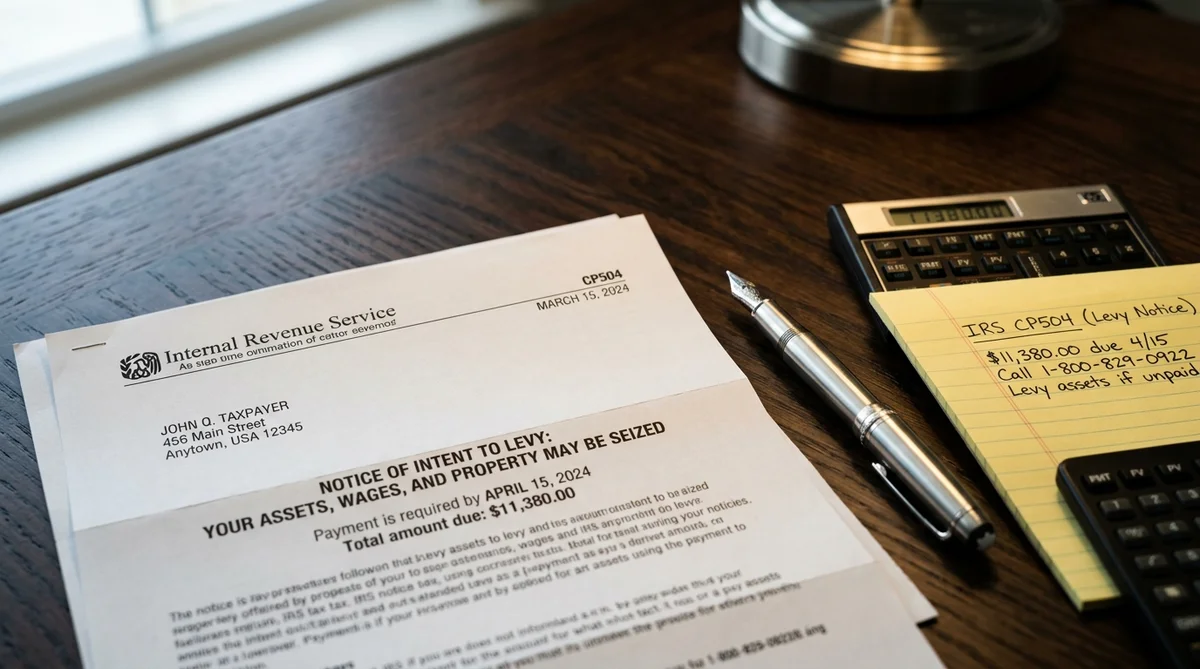
2. Bank Account Freeze vs. Wage Garnishment
Understanding how a bank levy differs from ongoing wage garnishment allows you to structure the correct defense:
| Enforcement Characteristic | IRS Bank Account Levy (§ 6332c) | IRS Wage Garnishment (Form 668-W) | Emergency Defense Action |
|---|---|---|---|
| Duration & Attachment | One-time snapshot (Freezes balance on service date) | Continuous attachment (Takes every subsequent paycheck) | Intervene before Day 21 wire |
| Holding Period Before Surrender | Mandatory 21 Calendar Days | No holding period (Withheld immediately upon pay date) | 21-day intervention window |
| Targeted Assets | Checking, savings, CDs, and money market accounts | W-2 wages, salary, bonuses, and commissions | Protect operating liquidity |
| Release Mechanism | Form 668-D faxed to central bank legal department | Form 668-D faxed to employer payroll department | Direct practitioner fax release |
Did the IRS Just Freeze Your Bank Account in Waco?
Every hour of the 21-day holding period matters. Connect with a licensed CPA or IRS Enrolled Agent to prepare emergency hardship forms and unfreeze your money.
Answered 24/7 · Connects with Circular 230 Licensed CPAs & IRS Enrolled Agents · No SSN Collected Online
3. The 3-Step Playbook to Release Frozen Funds Before Day 21
Identify Day 1 of the 21-Day Clock
Obtain the exact date your financial institution was served with the notice of levy. Under federal law, the bank must hold the frozen funds for exactly 21 calendar days before sending them to the Treasury.
Compile Expedited Hardship Documentation
Work with a licensed CPA or IRS Enrolled Agent to prepare Form 433-F Collection Information Statement, substantiating that the frozen cash is necessary for immediate rent, payroll, utilities, or medical care.
Direct-Fax Form 668-D Levy Release to Bank Legal Processing
Have the IRS revenue officer or collection manager transmit an official Form 668-D directly to your bank's central levy compliance unit to unfreeze the balance.
Frequently Asked Questions: IRS Bank Account Levies
Can my local bank branch manager in Waco release my frozen account?
No. Under 26 U.S.C. § 6332(d), if a bank fails to honor an IRS levy, the bank itself becomes liable for the full amount plus a mandatory 50% statutory penalty. Local branch staff (at Extraco, TFNB, Frost, Chase, etc.) have no legal discretion; they can only release funds upon receipt of an official IRS Form 668-D.
Does an IRS bank levy freeze future deposits made after the levy date?
No. Unlike a continuous wage garnishment, an IRS bank levy is a one-time 'snapshot' attachment. It only freezes funds on deposit at the exact moment the bank receives the notice of levy. Funds deposited after that date are generally accessible unless the IRS issues a new subsequent levy.
What happens after the 21-day holding period expires?
On the 22nd calendar day, your bank is legally required by federal statute to wire the seized funds directly to the United States Treasury. Once the funds reach the Treasury, recovering them is exceptionally difficult. All defense actions must occur within the 21-day window.
What legal grounds qualify for an emergency bank levy release in Texas?
Under 26 U.S.C. § 6343, the IRS must release a levy if: (1) the levy causes immediate economic hardship threatening basic life necessities; (2) the liability is satisfied or the CSED statute expired; (3) an approved installment agreement is established; or (4) release will facilitate ultimate tax collection.
Don't Let Your Money Get Sent to the Treasury
Talk with a licensed Texas CPA or IRS Enrolled Agent now. Protect your funds and secure an official Form 668-D Levy Release before Day 21 expires.
Answered 24/7 · Connects with Circular 230 Licensed CPAs & IRS Enrolled Agents · No SSN Collected Online